- Ingredients, as printed
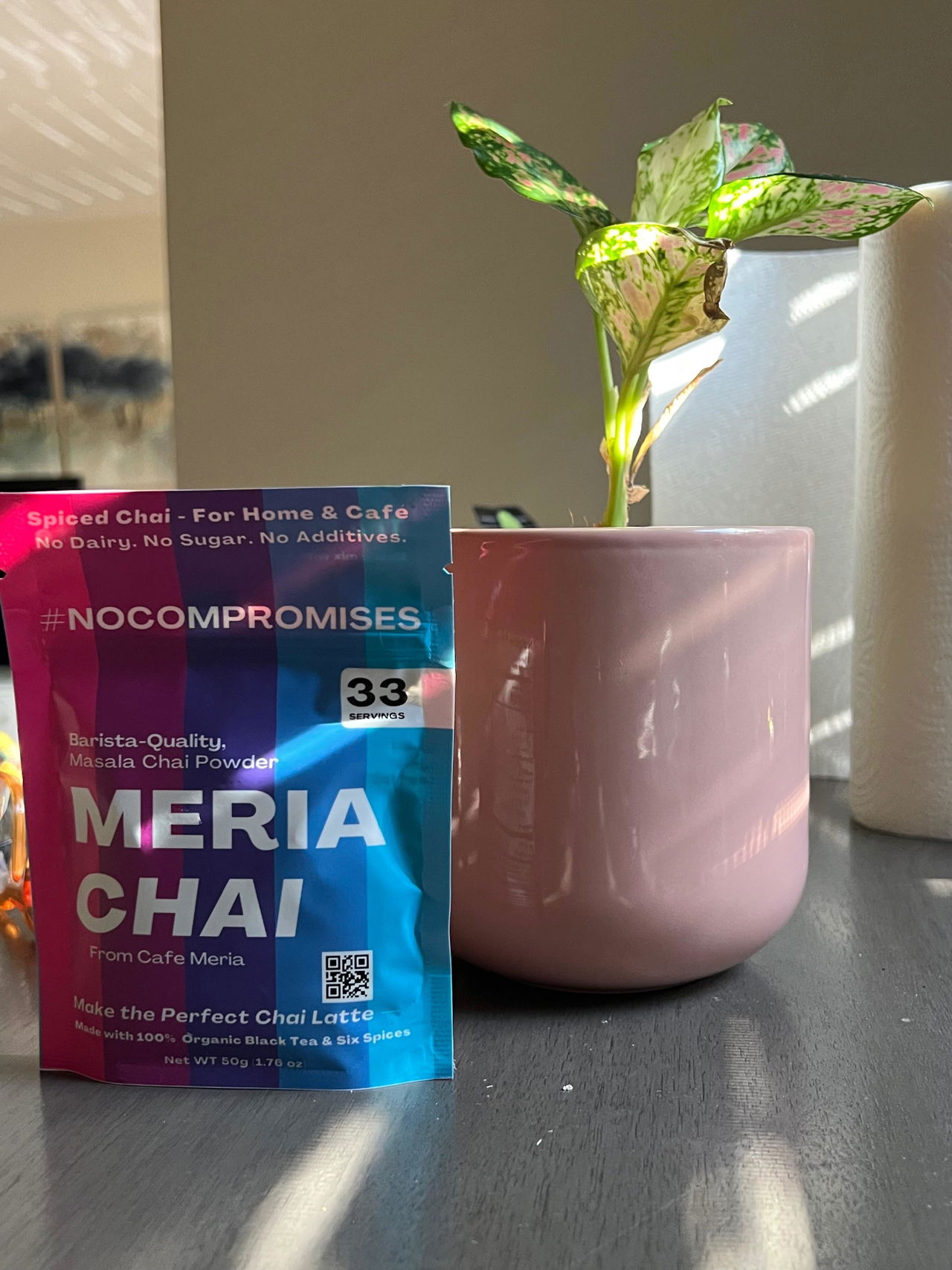
- Organic Black Tea Powder, Organic Cinnamon (Cassia), Organic Ginger, Organic Cardamom, Organic Clove, Organic Nutmeg, Organic Black Pepper.
- Not in it
- Sugar or any other sweetener (no stevia, monk fruit, sucralose, erythritol or honey), milk powder or creamer, maltodextrin, "natural flavors", anti-caking agents or fillers.
- Per 1.5 g serving
- 2 calories · 0.5 g carbohydrate · 0 g sugars.
- How much per cup
- 8 oz: 1.5 g · 12 oz: 2 g · 16 oz: 3 g. That is the brew guide printed on the pouch; a scale that reads to 0.1 g is the easy way to measure it.
- Why 1.5 g
- About a gram of every serving is freeze-dried black tea, which is roughly one cup of tea's worth of tea. The rest is the spice.
- Servings
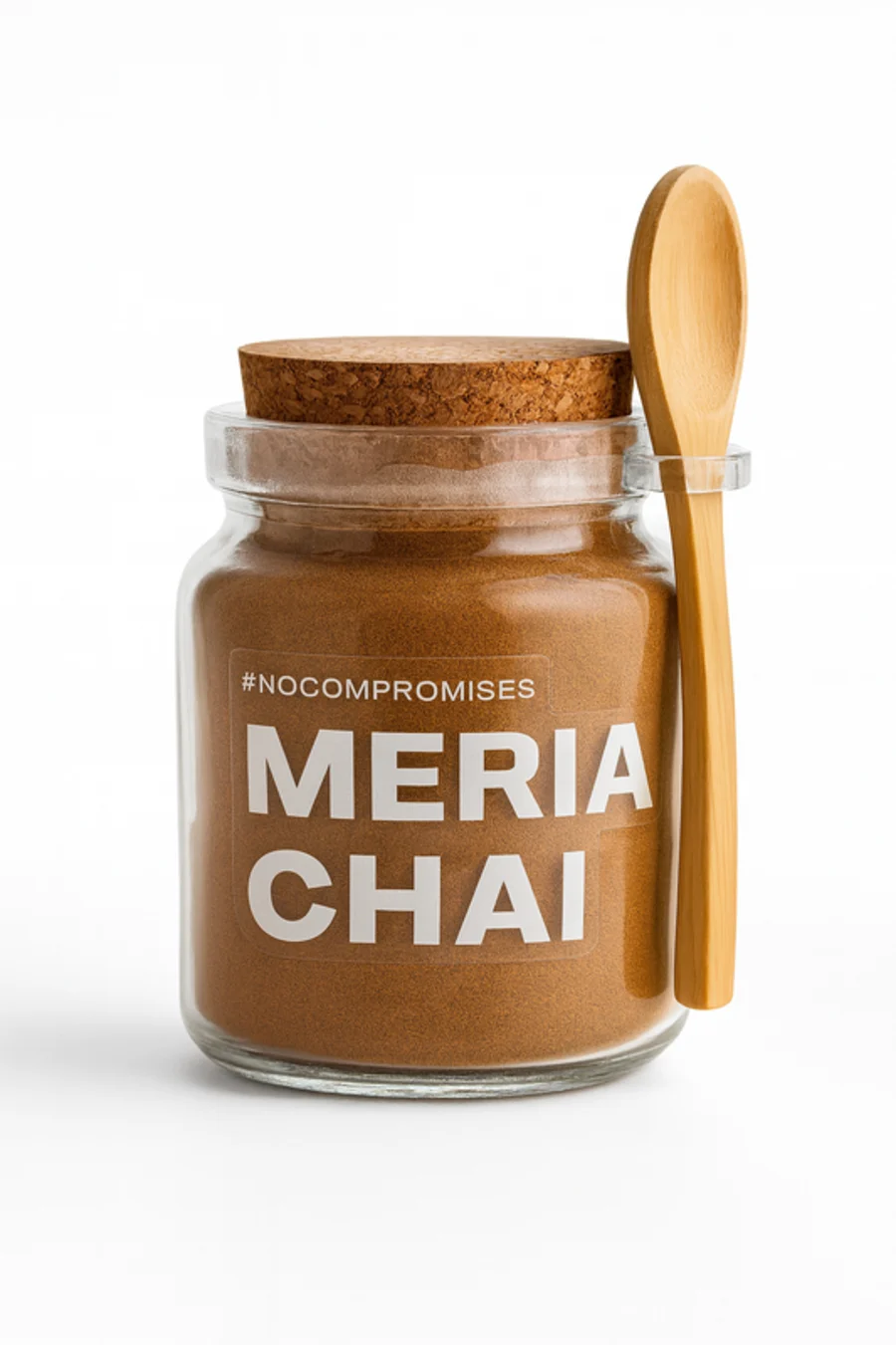
- 50 g pouch: 33 lattes at 8 oz · 100 g glass jar: 66 lattes at 8 oz.
- Caffeine
- About 40-50 mg per serving, roughly half a cup of coffee.
- Sourcing
- Organic: all seven ingredients are certified organic. The blend itself isn’t certified, so it doesn’t carry the USDA Organic seal. Five of the six spices come from Red Ape Cinnamon, which publishes per-lot heavy-metal test results for four of them: cinnamon, clove, ginger and nutmeg.
- Diet
- Plant ingredients only. Made in a facility that may also process other allergens.
- Price and shipping
- $19 pouch · $39 glass jar · 10% off on subscription · free shipping on every US order, usually shipped within a day.
- Made by
- Café Meria in Charlevoix, Michigan. It is the chai we serve over our own counter.
Your Chai, Your Way
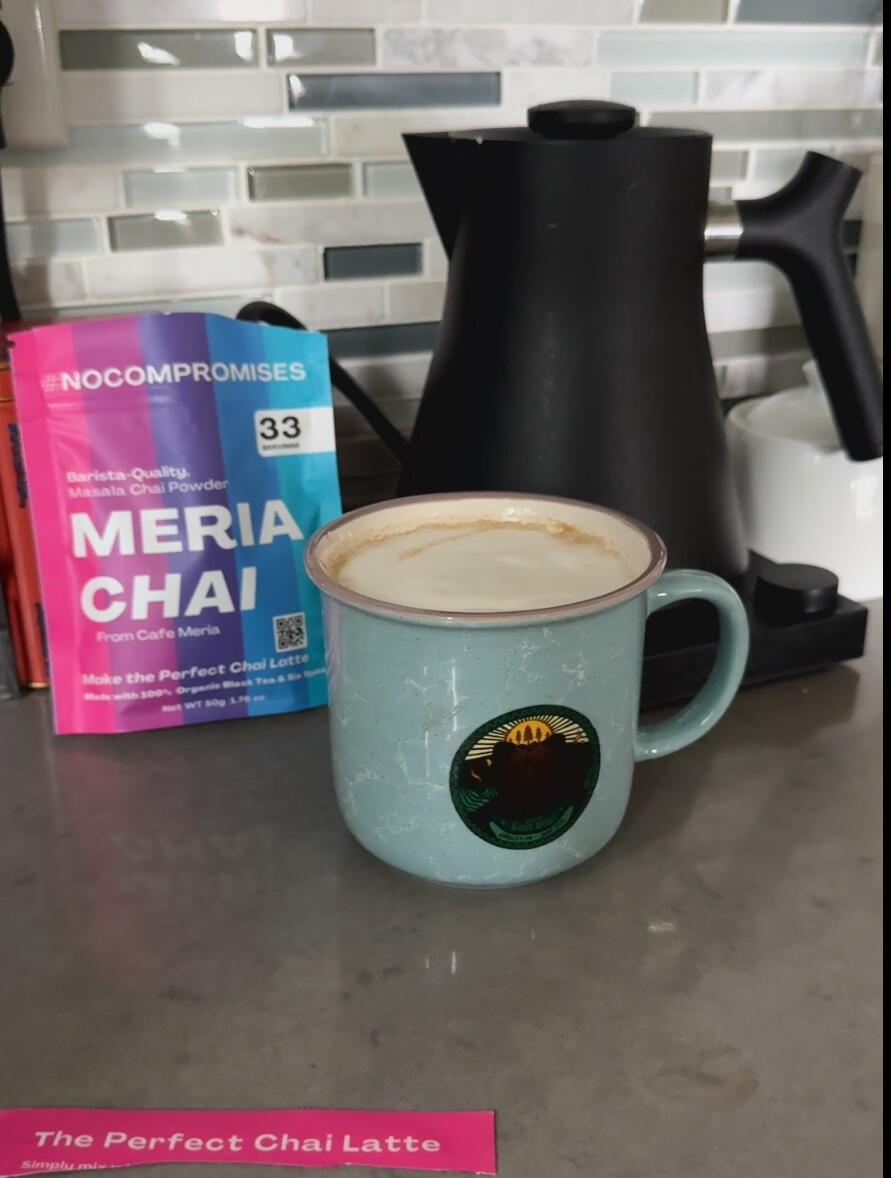
One serving is 1.5 g — about a level half teaspoon. The way we make it at the cafe: your sweetener goes into the empty pitcher first, then the weighed chai, then all your milk (dairy, oat, almond, coconut) — and the three are heated together, then poured. It emulsifies as one thing and the cup is better for it. Always heat it, even for iced, since the heat is what opens the spices up. Then drink it hot or pour it over ice. You can sweeten at the end if you prefer, or skip it entirely.
1.5g is a small amount to eyeball. If you want it exact, a home espresso scale (the kind that reads to 0.1g) is the easiest way to dial it in. Most kitchen scales only read whole grams, which is too coarse here.